
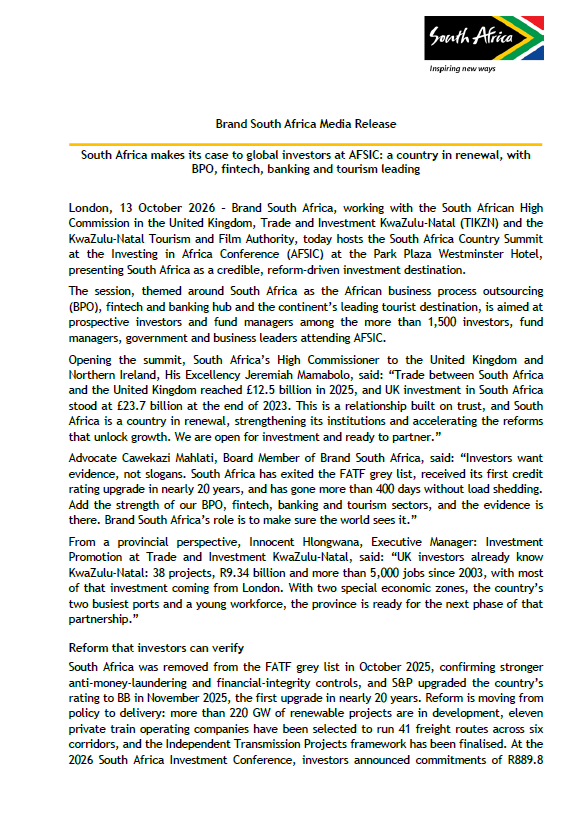
South Africa makes its case to global investors at AFSIC: a country in renewal, with BPO, fintech, banking and tourism leading
Female-led empowered venture fund, backed by Knife Capital and Thinkroom, targets the Seed-to-Series A funding gap Johannesburg, South Africa, 9 September 2026: Grindstone Ventures has announced the launch
of a R500 million venture fund to invest in high-growth, technology-enabled African businesses from Seed through Series A, targeting the transition from early commercial validation to
institutional scale.
Led by Thandiwe Maqetuka, Grindstone Ventures combines her venture leadership with the experience and networks of Knife Capital and Thinkroom, which have partnered with Maqetuka to build and back the female-led fund with a black empowered fund manager. This fund follows the successful deployment of Grindstone Ventures Fund I which invested in seven portfolion companies, and catalysed further seed investment with local South African funders to enable future funding, including Locstat, Welo and AgriLogiQ which went on to raise further equity funding from international funders. The Fund is also finalising a lucrative exit that will return meaningful
capital to investors, adding credibility and momentum into the harvesting phase.
“The evolution from Seed to Series A remains one of the clearest gaps in the African venture ecosystem,” said Keet van Zyl, Co-Founder of Knife Capital. “The lessons from Grindstone Ventures Fund I have shown us exactly where that gap bites, and this fund gives us the opportunity to close it.”
The partnership leverages Thinkroom’s experience in entrepreneur development and acceleration and Knife Capital’s track record in venture investment, scaling technology businesses and strategic exits. Together with the Grindstone Ventures investment team, this creates a platform for sourcing and supporting high-growth African companies.
The fund is targeting a first close of R150 million and intends to build a portfolio of 15 to 20 businesses, primarily in South Africa and selectively elsewhere on the continent. The launch comes as African venture capital shows renewed momentum, but capital remains unevenly distributed. While overall technology funding strengthened in 2025, Seed funding declined for a third consecutive year, leaving many promising businesses undercapitalised at the point where they need to scale.
“Some of Africa’s most promising businesses are getting caught in the space between proving that something works and having the scale required to attract larger pools of institutional capital,”
says Thandiwe Maqetuka, Managing Partner of Grindstone Ventures.
“That is Africa’s missing middle. Our opportunity is not simply to provide more capital, but to identify exceptional businesses earlier, invest at a point where capital remains scarce, take meaningful ownership positions and work actively with founders to build companies capable of scaling, attracting institutional capital and ultimately delivering realisable returns.”
Grindstone Ventures will invest from Seed through Series A, with capacity to provide follow-on capital to its strongest-performing companies. Its strategy combines meaningful minority
ownership with active portfolio engagement and concentrating additional capital behind the strongest performers. Portfolio companies benefit from key relationships Grindstone Ventures has
with VC industry players that can co-invest beyond Series A to fuel growth.
“We have deliberately designed the portfolio around the realities of venture investing,” says Maqetuka. “We diversify at entry, allow performance to emerge and then concentrate capital
behind the strongest performers. Importantly, we are building for liquidity from the outset. Paper valuations don’t return capital to investors, exits do. That focus on realisable returns draws directly on the experience supporting Grindstone Ventures.
Knife Capital has spent nearly two decades investing in and scaling African innovation-driven businesses, with portfolio exits to global strategic acquirers, while Thinkroom and the broader Grindstone platform have extensive experience executing on GTM and sales initiatives to identify and develop high-growth entrepreneurs. More than 1,000 businesses are screened annually through Grindstone, with around 50
participating in accelerator programmes each year. “What sets Grindstone Ventures apart is that the pipeline came before the fund,” says Catherine Young, Investment Committee Member and co-founder on Grindstone Ventures Fund I. “Through the Grindstone ecosystem, we have been working with and observing high-growth businesses long before they reach an institutional investment process. That gives us an information
advantage and the ability to invest with greater conviction.”
Beyond capital, Grindstone Ventures will work with portfolio companies across strategy, governance, commercial growth, market access, follow-on funding and exit readiness, drawing
on Grindstone Ventures, Thinkroom and Knife Capital. While firmly returns-led, the fund also intends to broaden participation in Africa’s venture ecosystem. It aspires for at least 50% of portfolio companies to be black-owned, while ensuring a gender-balanced approach in the representation of female founders and women in leadership.
“We don’t believe investors should have to choose between financial performance and building a more inclusive investment ecosystem,” says Maqetuka. “Our responsibility is first and foremost to be disciplined stewards of investor capital. But if we can generate attractive commercial returns while directing more institutional capital towards exceptional black and female entrepreneurs who have historically had less access to that capital, we can begin changing both sides of the market.”
“Africa does not have a shortage of entrepreneurial talent,” Maqetuka adds. “What remains scarce is the combination of capital, patient ownership, active support and institutional discipline requiredto take businesses from early commercial validation to meaningful scale. That is the gap Grindstone Ventures intends to fill.”
ENDS
About Grindstone Ventures
Grindstone Ventures is a female-led African venture capital fund investing in high-growth, technology-enabled businesses from Seed through Series A. Grindstone Ventures combines investment capital with active portfolio support across strategy, governance, commercial growth, market access, capital strategy and exit readiness, leveraging capabilities and networks across the broader Grindstone, Thinkroom and Knife Capital ecosystem.
Grindstone Ventures targets meaningful minority ownership positions in scalable African businesses and follows a concentrated portfolio strategy designed to generate attractive risk adjusted returns while broadening access to institutional venture capital for underrepresented founders.
Media Enquiries
Thandiwe Maqetuka
Managing Partner
Grindstone Ventures
thandiwe@gsventures.africa
At this year’s AFSIC conference, British International Investment (BII) British International Investment is bringing together investors and business leaders to discuss one of Africa’s most overlooked investment opportunities, Black-owned and led businesses (BOLD). The discussion will coincide with the publication of BII’s new BOLD Market Mapping Report, which highlights the financing gap and examines the barriers that continue to limit access to capital for these businesses despite their contribution to economic growth, innovation and job creation across the continent.
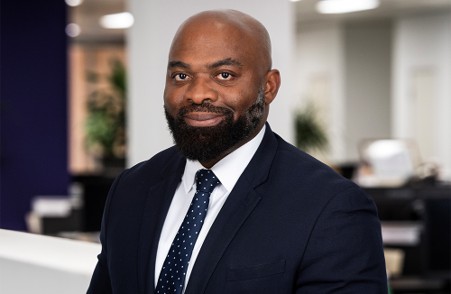
As part of the conversation, this article by Chris Chijiutomi, BII’s MD and Head of Africa, explores why investing in Black-owned and led businesses is not only an important driver of inclusive growth, but also a compelling commercial opportunity.
How investing in black owned and led businesses in africa pays dividends
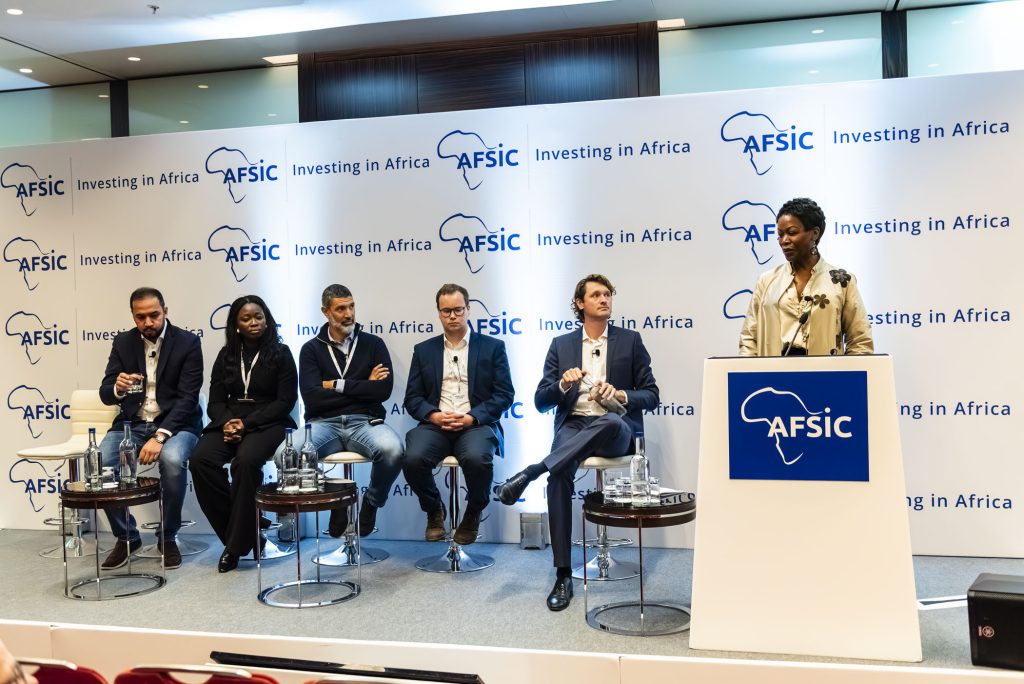
London, UK AFSIC (www.afsic.net), now in its thirteenth year as Africa’s premier investment conference, today confirmed details of its 2026 event, taking place 13-14 October at the Park Plaza Westminster, London. This year’s programme is the most comprehensive in the conference’s history, spanning critical industry sectors, drawing an exceptional calibre of investors, and backed by unprecedented sponsor support.
A Packed Agenda Across Africa’s Key Growth Sectors
AFSIC 2026 will feature an extensive programme of panels, presentations, and dedicated sessions covering the sectors driving Africa’s investment story, including: Mining and economic impact, Fintech and crypto, Sovereign credit ratings and local currency bond markets, Insurance, Healthcare, Microfinance, Education, Power, Infrastructure and Sustainable development.
With two full days of content augmented by exceptional networking sessions both structured and free flowing, delegates will have the opportunity to engage with the sectors shaping the continent’s economic future, all under one roof.
A Global, Quality Investor Base
AFSIC continues to attract a diverse and high-quality mix of investors from around the world, including institutional investors, development finance institutions, private equity, sovereign wealth funds, and family offices. The conference’s Meet the Investor sessions and Fund Spotlight will once again connect fund managers and businesses directly with the capital they need to grow, with even more investors confirmed to attend in 2026 than in previous years.
Spotlight on Country Investment Summits
AFSIC 2026 will also showcase many countries with sponsored investment summits highlighting country specific opportunities and investment climates.
Backed by an Outstanding Group of Sponsors
This year’s event enjoys exceptional support from across the sector ecosystem. New and returning sponsors include British International Investment (BII) as sponsors of the MAD event, and welcomes back Brand SA, Casablanca Finance City, SAID Business School, Manufacturing Africa, DTOS, Africa Eats, BVI Finance, UKGCC, Icecap, Meritas, Verdant Capital, Numeral, UKGCC and Strafin as well as fabulous support from new sponsors – Africa legal risk, Aqua Spark, First Mutual, Niofar Capital, Pro Serve, Aabey House and Tola. Sponsored panels from BVI Finance and CareEdge add further depth to the programme, reflecting the breadth of institutions choosing to align with AFSIC’s platform in 2026.
Register Now
With demand for places growing and the agenda more comprehensive than ever, AFSIC 2026 promises to be an unmissable gathering for anyone invested in Africa’s future. Early registration is strongly encouraged.
To register or find out more, visit www.afsic.net
AFSIC – Investing in Africa:
AFSIC – Investing in Africa is Africa’s leading investment conference, now in its thirteenth year, connecting investors, businesses, and institutions across the continent’s most dynamic sectors. Held annually in London, AFSIC brings together a global community committed to unlocking investment and driving growth across Africa.
About African Investments Limited:
African Investments Limited, operates two multi award-winning digital platforms, the African Investments Dashboard (www.africaninvestments.ai), connecting global investors with curated, high-quality investment opportunities across Africa, and the Africa Business Opportunities Dashboard (www.businessopportunities.ai), which matches business, trade and investment opportunities across Africa covering all business objectives, products, sectors and countries in Africa.
Resources:
Logos:

As Africa’s investment landscape matures, the leaders shaping its future are increasingly being trained for it directly. Oxford Saïd Business School’s Africa Initiative is doing exactly that, embedding Africa-focused content into its MBA and Executive Education programmes and building a global network of talent, alumni and industry leaders through the Oxford Africa Business Alliance and its annual Africa Business Forum. As one of the headline sponsors of AFSIC 2026, we spoke with Oxford Saïd about the gap their Africa Initiative fills, how their alumni network is already feeding into the continent’s investment ecosystem, and what they hope to gain from connecting with delegates in London this October. Oxford Saïd Business School is a sponsor for AFSIC 2026.

What is the mission behind Oxford Saïd’s Africa Initiative, and what gap is it designed to fill?
The mission of Oxford Saïd’s Africa Initiative is to build a strong network that bridges Africa and the global community, showcasing opportunities while equipping leaders to navigate challenges. Through thought leadership, talent and networks, we strengthen Africa’s voice globally and create avenues to support more informed leadership, investment and entrepreneurship across the continent. It addresses the need for more sustained, rigorous and connected engagement with African markets, leaders and institutions.
Oxford Saïd has embedded Africa-focused content directly into its MBA and Executive Education curricula — how does this translate into practical value for business leaders and investors working on the continent?
Africa focused teaching on our degree programmes gives students and executives the tools required to understand market complexity, financing, infrastructure, human capital, data and political context. Some classes are delivered on the continent, giving participants the opportunity to visit companies, engage with business leaders and see firsthand how organisations operate in African markets. For leaders and investors, this translates into sharper judgement, better risk assessment, stronger local partnerships and more informed decisions about where and how to build, invest and grow.
Through the Oxford Africa Business Alliance and the annual Africa Business Forum, you bring together students, alumni, and industry leaders — what themes or opportunities are you seeing emerge most strongly from those conversations right now?
Through the Africa Alliance and Africa Forum, now in its 18th year, we are seeing a clear shift from broad discussions about Africa’s potential to more practical conversations about implementable solutions for the next generation. Across these conversations, there is a strong emphasis on Africans being at the forefront of designing solutions to the continent’s challenges, with global partners playing a collaborative role through mutually beneficial partnerships. The opportunity is to move from dialogue to action by building the systems, partnerships and capital needed to unlock responsible growth.
What role do you see business schools playing in shaping how global investors understand and engage with African markets?
Business schools can help global investors develop a more nuanced understanding of African markets by highlighting opportunity, local context, talent, innovation and long-term growth potential. At Oxford Saïd, we do this by shaping what future leaders learn, bringing investors and business leaders into dialogue, and ensuring African perspectives are central to the conversation. This helps build stronger market insight, more credible leadership, and better informed engagement with African economies.
Through your Africa scholarships and recruitment efforts, you’re investing directly in the next generation of African business leaders — how do you see this talent pipeline feeding back into Africa’s investment landscape over the next decade?
Oxford Saïd has supported over 450 African students on our degree programmes, with alumni represented across more than 25 African countries. Today, African students represent around 10% of the MBA class, with over 60% receiving scholarships and over half being women. Many of our alumni already hold leading roles across the investment landscape on the continent and beyond, including in finance, venture capital, private equity, entrepreneurship, development finance and public institutions. Over the next decade, this pipeline will expand Africa’s investment landscape by producing investors, founders and operators who can mobilise capital, build investable businesses, improve governance and connect African opportunities with global networks.
What does Oxford Saïd hope to achieve by participating in AFSIC 2026, and what kind of delegates or partners are you hoping to connect with at the conference?
At AFSIC 2026, Oxford Saïd hopes to strengthen connections with investors, entrepreneurs, development finance institutions, corporates, and partners who are actively shaping Africa’s growth story. We are particularly interested in meeting delegates who share our commitment to talent, responsible investment, entrepreneurship and long-term institutional engagement with the continent. We also hope to explore how Oxford Saïd can support organisations through access to talent, research, education and convening platforms that advance long-term value creation in African markets.
About AFSIC – Investing in Africa:
AFSIC – Investing in Africa is Africa’s leading investment conference, now in its thirteenth year, connecting investors, businesses, and institutions across the continent’s most dynamic sectors. Held annually in London, AFSIC brings together a global community committed to unlocking investment and driving growth across Africa.
About African Investments Limited:
African Investments Limited, operates two multi award-winning digital platforms, the African Investments Dashboard (www.africaninvestments.ai), connecting global investors with curated, high-quality investment opportunities across Africa, and the Africa Business Opportunities Dashboard (www.businessopportunities.ai), which matches business, trade and investment opportunities across Africa covering all business objectives, products, sectors and countries in Africa.
Resources:



Ask any fund manager raising capital right now and you’ll hear the same thing: LPs have changed the conversation. Africa’s investment case is no longer just the pitch, but how a manager will execute against it. To unpack what that shift means in practice, we sat down with two fund managers, Farmties Capital and Anza, for a fireside chat on what it takes to be investor-ready today.
What emerged wasn’t two separate interviews so much as one conversation happening in parallel. Both firms converged on the same three questions every fund manager should ask before seeking capital: what are LPs actually looking for, what does investor-readiness demand beyond a good thesis, and where is the market heading.
Both firms agree that LP appetite for Africa hasn’t disappeared, it has matured. The days of allocating on narrative alone are over; what’s replaced them is a much harder-nosed look at execution.
Farmties: LPs remain interested in Africa, but with heightened selectivity, focused on capital preservation, proven execution capacity, and clear pathways to liquidity. Appetite has shifted toward private credit and revenue-linked strategies over earlier-stage equity, particularly where impact and commercial outcomes are clearly aligned.
“LPs are no longer asking whether Africa has potential. They are asking how that potential is being systematically captured.”
Source: Anza
Anza points to a consistent checklist now showing up across the market: clear differentiation and thesis depth, exit visibility, blended capital structures that crowd in commercial LPs while preserving return discipline, and local presence paired with global connectivity to acquirers and follow-on capital.
Both firms made the same point from different angles: a compelling thesis earns a first meeting, not a commitment. What earns the commitment is everything underneath it.
“Being investor-ready goes far beyond having a strong thesis. LPs expect clarity on governance, fund economics, risk frameworks, and portfolio construction from day one.”
Source: Farmties
Between them, three additional disciplines stood out as the real markers of an investor-ready fund manager.
● Data room discipline: Real-time access to governance documents, valuation policies, impact frameworks, compliance manuals and portfolio data is now expected
● Consistency across every document: Your PPM, financial model, impact thesis and track record need to align numerically and strategically, with clear, specific language on use of proceeds and return drivers
● Proactive risk disclosure and narrative clarity: Addressing currency, regulatory, and liquidity risks upfront builds credibility, and LPs need to understand why you exist, what gap you fill, and how you create return asymmetry.
Asked where the opportunity is moving, both firms pointed to a similar structural story from different vantage points in the capital stack.
Farmties: We’re seeing growing interest in private credit, structured finance, and hybrid models that blend debt with downside protection, alongside increasing attention on climate-resilient sectors such as agribusiness, food systems, and supply-chain infrastructure. LPs are more focused on real-economy impact, unit economics, and trade opportunities, with stronger expectations around measurable ESG integration.
“Blended capital structures are becoming structurally important in early-stage African VC, de-risking commercial LP participation and rewarding managers who understand capital stacking.”
Source: Anza
Anza also flags AI as an increasingly decisive factor in fund performance, now integrated into deal sourcing, due diligence, LP engagement, and portfolio monitoring, alongside currency arbitrage as an emerging competitive advantage in African markets.
Strip away the different vocabularies, capital preservation versus risk-adjusted strategy, structured finance versus blended capital, and Farmties and Anza are describing the same LP: more selective, more literate in African market structures, and far less willing to separate impact from unit economics. Being investor-ready means showing your work everywhere at once, in your governance, your data room, your risk disclosures, and your narrative, and proving, not just promising, that your fund can turn Africa’s potential into a repeatable, de-risked return.
This fireside chat was conducted ahead of AFSIC- Investing in Africa 2026, the continent’s flagship investment conference, bringing together fund managers, LPs, and DFIs to accelerate capital flows into Africa. 13th to 14th October 2026 | Park Plaza Westminster | London | www.afsic.net
About AFSIC – Investing in Africa:
AFSIC – Investing in Africa is Africa’s leading investment conference, now in its thirteenth year, connecting investors, businesses, and institutions across the continent’s most dynamic sectors. Held annually in London, AFSIC brings together a global community committed to unlocking investment and driving growth across Africa.
About African Investments Limited:
African Investments Limited, operates two multi award-winning digital platforms, the African Investments Dashboard (www.africaninvestments.ai), connecting global investors with curated, high-quality investment opportunities across Africa, and the Africa Business Opportunities Dashboard (www.businessopportunities.ai), which matches business, trade and investment opportunities across Africa covering all business objectives, products, sectors and countries in Africa.
Resources:
www.afsic.net
www.africaninvestments.co
www.africaninvestments.ai
www.businessopportunities.ai
About Farmties Capital:
Farmties Capital is an investment firm dedicated to boosting trade between Africa and global markets, particularly North America. Focused on revenue-generating SMEs in the agricultural sector, Farmties supports business growth through tailored financing, technical assistance, and market access. We partner with development finance institutions, donor and trade organizations, and like-minded investors to provide funding, technical assistance, and market linkage to high-impact agribusinesses.
About Anza:
Anza is an authorised Financial Services Provider (FSP 53884) based in Johannesburg, South Africa. The firm invests blended capital, equity, and debt into early-stage African startups building scalable technology solutions to critical global problems. The firm backs strong founder-led teams across Food Technology, Clean Technology, and Digital Technology in Southern and East Africa.

AFSIC welcomes Tola Mobile as sponsor – Inside Tola’s Cross-Border Payments Strategy
As Africa’s digital economy continues to attract global capital, one challenge keeps surfacing for businesses looking to scale across the continent: payments infrastructure that works in Lagos doesn’t necessarily work in Nairobi, and what succeeds in Accra may fall flat in Kampala. It’s a fragmentation problem that Tola Mobile has spent years solving — building direct integrations with mobile money operators across 24 African markets to give merchants a single point of access to a famously diverse payments landscape.
Tola joins this year’s AFSIC – Investing in Africa 2026 as a sponsor, where over 200 investors and 350+ speakers will gather to explore the opportunities shaping the continent’s investment story. Ahead of the conference, we spoke to Tola about what differentiates their approach to payment orchestration, the outsized role mobile money plays in financial inclusion, and what they’re hoping to get out of their time at AFSIC 2026.
What key challenges does Tola Mobile address, and what is your mission?
One of the biggest misconceptions about African payments is that people talk about “the African market” as though it’s a single ecosystem. It isn’t. Payment dynamics vary significantly across the continent. Some markets are bank account, card and PSP-led, while much of sub-Saharan Africa is built around mobile money. Businesses expanding across Africa quickly discover that success in one market doesn’t automatically translate into another.
That’s the challenge Tola was founded to solve.
Our mission is to simplify access to Africa’s fragmented payment landscape through a single, scalable platform. Rather than merchants having to build and maintain separate integrations with mobile money operators and local payment providers in every country, they integrate with Tola once and gain access to multiple markets through a consistent technical and operational framework.
Ultimately, we want businesses to focus on growing across Africa while we take care of the complexity of local payments.
Tola connects to mobile money operators across 24 African markets through a single platform – how did you build that kind of reach, and what’s been the biggest challenge in scaling it?
We’ve built the platform market by market over a number of years, focusing on creating high-quality, direct integrations rather than taking shortcuts.
Each new market requires understanding local regulations, operator APIs, settlement models, commercial relationships and customer behaviour. While that takes time, it also creates a much stronger foundation for merchants looking to scale.
The biggest challenge has been recognising that there is no such thing as a standard African payments model. Every country has evolved differently. Rather than trying to force every market into the same approach, we’ve built infrastructure that accommodates those differences while presenting merchants with a single API and a consistent operational experience.
That’s what allows businesses to expand more quickly without having to reinvent their payments strategy every time they enter a new market.
What role does mobile money play in Africa’s broader financial inclusion story, and how does Tola’s infrastructure support that?
Mobile Money is one of Africa’s greatest technology success stories.
For millions of people across the continent, a mobile wallet isn’t simply another payment option; it’s their primary financial account. It has transformed access to financial services and created enormous opportunities for businesses to reach customers who may never have had access to traditional banking.
Businesses entering African markets therefore need to meet consumers where they already transact, rather than expecting them to adopt new payment behaviours.
Tola’s infrastructure enables exactly that. We provide businesses with simple access to the mobile money ecosystems consumers already know and trust, while also supporting cards and other local payment methods where appropriate. That helps merchants increase payment acceptance, improve customer experience and participate more effectively in Africa’s rapidly growing digital economy.
What differentiates Tola from other payment infrastructure providers operating in the region?
Many payment providers have built highly successful businesses within individual African markets. The challenge comes when businesses want to operate across the continent, because Africa isn’t a homogeneous payments market.
Infrastructure that works exceptionally well in one country doesn’t automatically translate into another, particularly where payment behaviours, regulation and mobile money adoption differ significantly.
Tola was built from the outset to solve that cross-border complexity. Rather than asking merchants to adapt to the complexities of each local market, we adapt our platform to those markets, giving customers a consistent experience regardless of where they operate.
We’re an infrastructure business focused on payment orchestration rather than simply payment processing. Our platform enables merchants to integrate once and access multiple payment rails across African markets through a single connection, while still benefiting from local direct settlement and payment methods that consumers already trust.
Our focus has always been on making expansion across Africa simpler, faster and more reliable.
AFSIC brings together institutional investors, DFIs, and corporates focused on Africa — what does Tola hope to get out of participating in AFSIC 2026, and what kind of partners or investors are you hoping to connect with?
We’re attending AFSIC because it’s one of the few events that brings together investors, financial institutions, technology companies and businesses that share a long-term commitment to Africa’s growth.
For us, the value lies in building relationships. We’re looking forward to meeting organisations that understand the importance of payments infrastructure in enabling digital commerce across the continent, whether that’s potential enterprise customers, strategic partners or investors.
While we’re not currently raising capital, we’re always interested in engaging with organisations that share our long-term vision for simplifying payments across Africa.
Just as importantly, we’re looking forward to contributing to the conversation around the future of African payments and sharing some of the lessons we’ve learned building infrastructure across one of the world’s most diverse and dynamic payment landscapes.
About AFSIC – Investing in Africa:
AFSIC – Investing in Africa is Africa’s leading investment conference, now in its thirteenth year, connecting investors, businesses, and institutions across the continent’s most dynamic sectors. Held annually in London, AFSIC brings together a global community committed to unlocking investment and driving growth across Africa.
About African Investments Limited:
African Investments Limited, operates two multi award-winning digital platforms, the African Investments Dashboard (www.africaninvestments.ai), connecting global investors with curated, high-quality investment opportunities across Africa, and the Africa Business Opportunities Dashboard (www.businessopportunities.ai), which matches business, trade and investment opportunities across Africa covering all business objectives, products, sectors and countries in Africa.
Resources:
Impact fund, Oxano Capital, shares their insights on successful investing in Africa. Investor readiness goes beyond pitch decks and data rooms. It means clarity, alignment, and credibility. It includes governance structures, transparent reporting, strong team, and the ability to articulate risks as confidently as opportunities. Oxano Capital has utilized the African Investments Dashboard for curated introductions, structured data, and sector insights that reduce noise and increase efficiency in their screening process.
Introduction
Oxano Capital is an impact investment fund based in the Netherlands with a focus on the Sub-Saharan Africa, with team members in the Netherlands, Ethiopia, Nairobi, and Uganda. We invest in manufacturing companies, businesses in the agro-processing sector, and technology-driven enterprises with a goal to achieve sustainable impact for the individual, the community, and the local economy. Our investment thesis is grounded in the belief that these sectors create jobs, strengthen local value chains, and enhance resilience, which are critical to long-term economic transformation.
The name Oxano comes from the Greek word Auxano which means ‘to cause growth’. We believe that through the development of businesses, growth is realized for individuals, communities, and economies. As impact investors, we put impact at the heart of every deal we evaluate, consistently asking key questions such as: How does this support the local economy? Does it build local capacity? Does it create dignified employment? Does it strengthen domestic production?
Our approach is hands-on and partnership driven. We aim to work closely with founders not only to provide capital, but also to support strategic development, governance strengthening, and operational improvement. For us, we don’t see sustainable returns and measurable impact as competing objectives rather as a mutually reinforcing pillars of our investment thesis.
Africa’s Potential
Africa is home to one of the world’s most dynamic frontier markets as infrastructure continues to improve, digital adoption accelerates, and regional market access deepens. Over the past years, the continent has undeniably attracted a lot of attention from the world.
We see particularly strong potential in:
In the investor landscape, we observe a strengthening role of local as well as international capital through various means from accelerators to venture capital. Blended finance, catalytic capital, and structured partnerships are becoming more common and necessary.
Investor Readiness
Raising capital as a Founder in Africa requires standing out and being prepared for the right questions with investors. This goes beyond pitch decks and data rooms. It means clarity, alignment, and credibility. Companies that differentiate themselves demonstrate deep market understanding, realistic financial projections, and evidence of execution, strong partnerships, and a clear vision on how to scale the company.
From our continued interaction with potential investees, it has become that investor readiness plays a huge role for companies to position themselves ready for an investment. Investor readiness today extends far beyond pitch decks and data rooms; it includes governance structures, transparent reporting, strong team, and the ability to articulate risks as confidently as opportunities. While storytelling still plays an important role in framing vision and purpose, execution of proof carries significantly more weight in final investment decisions.
Dealmaking with Intelligence
We have been utilizing AIDB (African Investments Dashboard), which has been instrumental in sourcing high-quality deal flow aligned with our mandate. The platform has supported us with curated introductions, structured data, and sector insights that reduce noise and increase efficiency in our screening process. In an increasingly competitive market, this kind of intelligent sourcing has become essential in locating the right deals.
In this evolving landscape, collaboration between investors, founders, and intelligent sourcing platforms like AIDB is becoming a defining factor in building resilient, investable businesses that can shape Africa’s next chapter of growth. Here at Oxano Capital, we remain committed to building strong relations with partners who share our mission.
About AFSIC – Investing in Africa:
AFSIC – Investing in Africa has become perhaps Africa’s most important annual investment event. AFSIC is wholly focused on accelerating Africa’s economic emergence by matching investment opportunities in Africa transforming Africa’s business, trade and investment environment, sustainably growing Africa’s economy at a continental scale.
About African Investments Limited:
African Investments Limited, operates two multi award-winning digital platforms, the African Investments Dashboard (www.africaninvestments.ai), connecting global investors with curated, high-quality investment opportunities across Africa, and the Africa Business Opportunities Dashboard (www.businessopportunities.ai), which matches business, trade and investment opportunities across Africa covering all business objectives, products, sectors and countries in Africa.
Resources:
Logos:
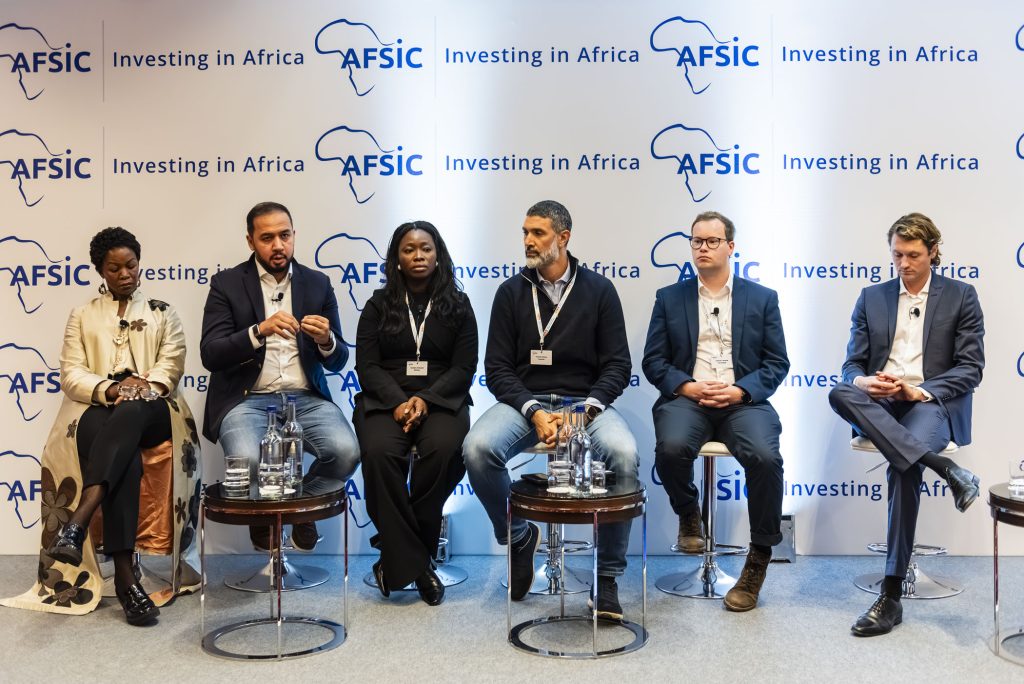
AFSIC – Investing in Africa, one of the world’s premier Africa-focused investment forums, has confirmed the first wave of high-calibre speakers for its 2026 gathering, taking place on 13–14 October at Park Plaza Westminster Bridge, London.
AFSIC 2026 will convene a curated network of institutional investors, private equity leaders, development finance institutions, family offices, and African corporates creating a high-trust environment where capital meets opportunity across the continent’s fastest-growing markets.
The initial speaker cohort reflects the breadth and depth of today’s global investment ecosystem, spanning financial services, infrastructure, energy, technology, agriculture, and sustainable development. Together, they will drive forward the conversation on capital allocation, market evolution, and Africa’s most compelling investment themes.
More than a conference, AFSIC is a deal-making platform. It combines sharp, insight-driven content with structured networking designed to convert dialogue into transactions. The 2026 speaker line-up will anchor this agenda bringing real-world experience and forward-looking perspectives on investing in Africa at scale.
The programme will feature keynote addresses, high-level panels, and sector deep-dives, alongside country investment summits and curated pitching sessions each designed to deliver actionable intelligence and direct investor engagement.
At its core, AFSIC is built for execution. Thousands of meetings take place annually via the African Investment Dashboard, connecting investors with businesses seeking capital, partnerships, and growth.
Further speakers will be announced in the months ahead, as AFSIC assembles a programme that captures the full scope and momentum of Africa’s investment landscape.
To view the full speaker line-up and register for AFSIC 2026, visit www.afsic.net.
About AFSIC – Investing in Africa:
AFSIC – Investing in Africa has become perhaps Africa’s most important annual investment event. AFSIC is wholly focused on accelerating Africa’s economic emergence by matching investment opportunities in Africa transforming Africa’s business, trade and investment environment, sustainably growing Africa’s economy at a continental scale.
About African Investments Limited:
African Investments Limited, operates two multi award-winning digital platforms, the African Investments Dashboard (www.africaninvestments.ai), connecting global investors with curated, high-quality investment opportunities across Africa, and the Africa Business Opportunities Dashboard (www.businessopportunities.ai), which matches business, trade and investment opportunities across Africa covering all business objectives, products, sectors and countries in Africa.
Resources:
Logos:

Alec Raia is a Managing Director at Cauris Finance, one of Africa’s most active private credit funds. We asked Alec to share some insights into the current investment landscape for African funds and provide some hot tips for African SME’s raising capital:
What key themes are you seeing in investing in Africa?
One of the clearest themes is an across-the-board shift back to fundamentals. Investors (not just debt investors but also equity investors) are prioritizing capital efficiency, profitability pathways, governance, and disciplined growth over headline expansion. There is less tolerance for growth at all costs and much more scrutiny on unit economics, underwriting quality, and the durability of business models in real operating environments.
At the same time, there is a growing appreciation for businesses that enable real economic activity. Platforms that help small businesses trade, move goods, access productive assets, and generate income. Capital is flowing more selectively, but it is flowing toward companies that solve structural constraints in African markets and demonstrate resilience through cycles.
What do you see is the US appetite for African investment at the moment?
We think there remains meaningful appetite in the U.S., particularly among family offices, high-net-worth individuals, institutional impact investors, and increasingly sophisticated commercial investors who understand risk-adjusted return in emerging markets. The capital that is active today tends to be a bit more informed, more patient, and more focused on managers with on-the-ground presence and disciplined underwriting frameworks.
The conversation has evolved from “Why Africa?” to “Who can execute consistently in Africa?” Investors want alignment, transparency, and proof of local expertise. For those who can demonstrate a strong track record, robust risk management, and credible pipeline depth, there is still significant interest from U.S. capital providers.
Traditionally, SMEs are considered unbankable. Given your focus on SMEs, what is your experience with their investability?
We actually disagree with the idea that SMEs are unbankable. In our experience, they are simply underserved, not unviable. The constraint has historically been the lack of institutions with the tools, data, and underwriting sophistication to assess them properly at scale.
Through our fintech partners, and increasingly via direct investments, we see tens of thousands of SMEs profitably and responsibly accessing working capital and productive asset financing every day. When credit is structured appropriately, priced responsibly, and monitored carefully, SME lending can be both commercially sustainable and economically transformative. We don’t think the opportunity is theoretical as it’s being demonstrated in multiple markets.
What changes are you seeing in the African investment ecosystem over the last 18–24 months?
There’s certainly been a bit of a reset – painful but also healthy. The ecosystem has returned to fundamentals, with a focus on cash flow visibility, profitability pathways, governance discipline and realistic growth assumptions. This has strengthened many businesses, forcing sharper focus and stronger execution.
At the same time, there have been headwinds. Development finance support has become more constrained in some cases, fundraising timelines have lengthened, and equity rounds take more time to close. The environment is more demanding, but arguably more sustainable. Companies that survive and grow in this period tend to emerge stronger.
For 2026, what feels fundamentally different about how you evaluate new investment opportunities compared to 2–3 years ago?
Our core underwriting philosophy has not changed. We continue to focus on businesses that are overlooked by other investors and operating in underserved, but high-potential markets (e.g., Francophone regions). We continue to prioritize sectors we understand deeply, particularly those that help entrepreneurs generate incremental income, which directly supports repayment capacity and credit performance.
What we think has changed is the bar for resilience. We expect longer cash runways if companies are pre-profitable, stronger risk controls, and tighter cost discipline. We are also more hands-on as investors than we were a few years ago, which is saying a lot for debt investors, as we were already very actively engaged. For example, we provide both formal and informal technical support, support fundraising efforts, get our hands even dirtier than before. We’ve come to strongly believe, as a fundamental component of our investment conviction, that in this environment, capital alone is not enough. Partnership and active oversight matter more than ever.
Do you have any tips for companies raising capital that will help them stand out?
Transparency and organization go a long way. Founders should present a clear narrative, backed by clean historical data and consistent reporting. Investors want to understand not just the upside, but the risks, and how management thinks about mitigating them.
It is also important to broaden the aperture. There is a growing group of debt and hybrid capital providers interested and actively investing in Africa. Make sure you meet everyone. Companies should engage widely and early, build relationships over time, and understand which type of capital best fits their stage and business model.
What mistakes do founders make when trying too hard to stand out?
Overselling is common. But inflated projections, aggressive assumptions, or selective disclosure can quickly erode trust. We think it’s safe to say that investors value realism and intellectual honesty more than polished optimism.
Another mistake is misunderstanding capital needs. For example, raising too much too early, mispricing risk, or assuming that scale automatically justifies higher valuations or lower debt pricing. Discipline around capital structure and growth pacing often matters more than flashy positioning.
What does investor readiness look like beyond pitch decks and data rooms?
Investor readiness ultimately comes down to stewardship. It is reflected in how management teams allocate capital, respond to challenges, communicate issues early and honestly and make difficult decisions when necessary. Governance, internal controls, and thoughtful financial planning are all signals of maturity.
Seasoned leadership that inspires confidence is critical. Investors want to back teams that demonstrate judgment, accountability, and consistency, not just ambition. Execution discipline is often the true differentiator.
Are certain sectors or business models quietly falling out of favor?
Trends come and go, particularly in early-stage venture markets. This is true in Africa just like it is true everywhere else. Some sectors inevitably fall out of favor as hype cycles shift. However, it’s safe to say that Africa’s core economic drivers—sectors like trade, mobility, SMEs, agriculture, financial services—will remain essential regardless of investor sentiment cycles.
The most durable opportunities tend to be those that enable productive economic activity. These may not always be the most fashionable sectors, but they are foundational to growth and income generation, and therefore we believe will continue to attract long-term capital, as they should.
How has the role of local versus international capital evolved?
There is growing recognition that local capital must play a larger role in financing African businesses. Domestic pension funds, family offices, and regional institutions are increasingly active, and we’re encouraged by development.
That said, international capital remains critical, particularly for backing early businesses and even scaling businesses while introducing global governance and structuring standards. We hope the future involves a deeper partnership between local and international capital, combining proximity and scale with context and rigor.
What has changed most meaningfully about raising capital in Africa over the past few years?
Certainly timelines have extended significantly. Fund managers and companies alike are facing longer diligence cycles, more detailed questioning, and higher documentation standards.
There is also less DFI anchoring in some segments, which means managers must demonstrate stronger commercial viability earlier. Capital is still available, but it is more selective and more disciplined.
What challenges remain largely unchanged?
Currency volatility remains a structural challenge across many markets. Managing FX risk, pricing appropriately, and building resilient capital structures continue to be central considerations for both investors and operators.
Of course, regulatory fragmentation and market complexity also persist – Africa comprises 54 countries!. Each operates differently, and scaling across borders requires careful navigation of legal, tax, and operational frameworks. Local expertise remains indispensable.
What fundamentals still matter regardless of market cycles?
Strong unit economics, prudent growth, and clear pathways to profitability always matter. Businesses must demonstrate that they can generate sustainable cash flow over time.
Equally important are governance, transparency, and alignment of incentives. Regardless of market conditions, investors consistently reward clarity, discipline, and sound capital stewardship.
What role does storytelling play today versus execution proof?
Storytelling remains important insofar as it frames vision, ambition, and long-term opportunity. But today, and particularly for debt investors like us, execution proof carries more weight than narrative alone.
What I mean is that investors want to see data-backed performance, repeatability, and operational consistency. The most compelling stories are those grounded in demonstrated results rather than aspirational projections.
What’s your experience with the AIDB & AI team in sourcing deal flow?
Our experience has been great. The AIDB & AI team has consistently brought forward many credible introductions and facilitated thoughtful engagement with companies and ecosystem participants across markets. We’re seeing great “deal flow” from the team both in terms of us looking for opportunities to place capital (i.e., investments) and to source capital (i.e., investees).
About AFSIC – Investing in Africa:
AFSIC – Investing in Africa has become perhaps Africa’s most important annual investment event. AFSIC is wholly focused on accelerating Africa’s economic emergence by matching investment opportunities in Africa transforming Africa’s business, trade and investment environment, sustainably growing Africa’s economy at a continental scale.
About African Investments Limited:
African Investments Limited, operates two multi award-winning digital platforms, the African Investments Dashboard (www.africaninvestments.ai), connecting global investors with curated, high-quality investment opportunities across Africa, and the Africa Business Opportunities Dashboard (www.businessopportunities.ai), which matches business, trade and investment opportunities across Africa covering all business objectives, products, sectors and countries in Africa.
About Alec Raia:
Alec has worked in Fintech, finance and financial inclusion for nearly two decades. Prior to joining Cauris, he worked at Mastercard with a focus on Fintech commercialization and financial inclusion. Before Mastercard, Alec worked at Goldman Sachs in the Investment Banking Division where he provided $3B+ in M&A and financing advisory services. He started his career at the International Rescue Committee (IRC) working on economic development programs in Africa and Asia.
About Cauris Finance:
Cauris Finance is one of Africa’s most active private credit funds. By expanding access to productive-use credit for small businesses and entrepreneurs, Cauris’ investments enable economic growth, job creation, and market development. They focus on sectors that power essential economic activity: cargo to drive trade, vehicles to move people and goods, and inventory to stock store shelves.
Cauris’ investment approach is grounded in capital preservation, disciplined structuring, responsible lending, and technology-enabled monitoring through their proprietary risk management platform. With teams across Anglophone and Francophone Africa, Cauris brings deep local insight and hands-on portfolio engagement.
Resources:
Logos:


































BEWARE OF PHISHING/SCAM/FRAUDULENT EMAILS
Please be aware of malicious persons offering to sell delegate lists from our event, assist with hotel bookings and other conference related services. Africa Events Limited does not sell its data to third parties.