
Standing Out in Africa’s Investment Landscape: Investor Readiness and Market Cycles with Cauris Finance
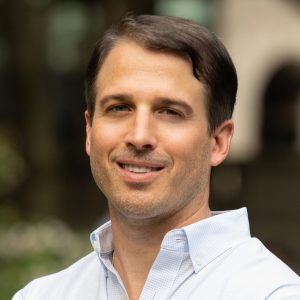
Alec Raia is a Managing Director at Cauris Finance, one of Africa’s most active private credit funds. We asked Alec to share some insights into the current investment landscape for African funds and provide some hot tips for African SME’s raising capital:
What key themes are you seeing in investing in Africa?
One of the clearest themes is an across-the-board shift back to fundamentals. Investors (not just debt investors but also equity investors) are prioritizing capital efficiency, profitability pathways, governance, and disciplined growth over headline expansion. There is less tolerance for growth at all costs and much more scrutiny on unit economics, underwriting quality, and the durability of business models in real operating environments.
At the same time, there is a growing appreciation for businesses that enable real economic activity. Platforms that help small businesses trade, move goods, access productive assets, and generate income. Capital is flowing more selectively, but it is flowing toward companies that solve structural constraints in African markets and demonstrate resilience through cycles.
What do you see is the US appetite for African investment at the moment?
We think there remains meaningful appetite in the U.S., particularly among family offices, high-net-worth individuals, institutional impact investors, and increasingly sophisticated commercial investors who understand risk-adjusted return in emerging markets. The capital that is active today tends to be a bit more informed, more patient, and more focused on managers with on-the-ground presence and disciplined underwriting frameworks.
The conversation has evolved from “Why Africa?” to “Who can execute consistently in Africa?” Investors want alignment, transparency, and proof of local expertise. For those who can demonstrate a strong track record, robust risk management, and credible pipeline depth, there is still significant interest from U.S. capital providers.
Traditionally, SMEs are considered unbankable. Given your focus on SMEs, what is your experience with their investability?
We actually disagree with the idea that SMEs are unbankable. In our experience, they are simply underserved, not unviable. The constraint has historically been the lack of institutions with the tools, data, and underwriting sophistication to assess them properly at scale.
Through our fintech partners, and increasingly via direct investments, we see tens of thousands of SMEs profitably and responsibly accessing working capital and productive asset financing every day. When credit is structured appropriately, priced responsibly, and monitored carefully, SME lending can be both commercially sustainable and economically transformative. We don’t think the opportunity is theoretical as it’s being demonstrated in multiple markets.
What changes are you seeing in the African investment ecosystem over the last 18–24 months?
There’s certainly been a bit of a reset – painful but also healthy. The ecosystem has returned to fundamentals, with a focus on cash flow visibility, profitability pathways, governance discipline and realistic growth assumptions. This has strengthened many businesses, forcing sharper focus and stronger execution.
At the same time, there have been headwinds. Development finance support has become more constrained in some cases, fundraising timelines have lengthened, and equity rounds take more time to close. The environment is more demanding, but arguably more sustainable. Companies that survive and grow in this period tend to emerge stronger.
For 2026, what feels fundamentally different about how you evaluate new investment opportunities compared to 2–3 years ago?
Our core underwriting philosophy has not changed. We continue to focus on businesses that are overlooked by other investors and operating in underserved, but high-potential markets (e.g., Francophone regions). We continue to prioritize sectors we understand deeply, particularly those that help entrepreneurs generate incremental income, which directly supports repayment capacity and credit performance.
What we think has changed is the bar for resilience. We expect longer cash runways if companies are pre-profitable, stronger risk controls, and tighter cost discipline. We are also more hands-on as investors than we were a few years ago, which is saying a lot for debt investors, as we were already very actively engaged. For example, we provide both formal and informal technical support, support fundraising efforts, get our hands even dirtier than before. We’ve come to strongly believe, as a fundamental component of our investment conviction, that in this environment, capital alone is not enough. Partnership and active oversight matter more than ever.
Do you have any tips for companies raising capital that will help them stand out?
Transparency and organization go a long way. Founders should present a clear narrative, backed by clean historical data and consistent reporting. Investors want to understand not just the upside, but the risks, and how management thinks about mitigating them.
It is also important to broaden the aperture. There is a growing group of debt and hybrid capital providers interested and actively investing in Africa. Make sure you meet everyone. Companies should engage widely and early, build relationships over time, and understand which type of capital best fits their stage and business model.
What mistakes do founders make when trying too hard to stand out?
Overselling is common. But inflated projections, aggressive assumptions, or selective disclosure can quickly erode trust. We think it’s safe to say that investors value realism and intellectual honesty more than polished optimism.
Another mistake is misunderstanding capital needs. For example, raising too much too early, mispricing risk, or assuming that scale automatically justifies higher valuations or lower debt pricing. Discipline around capital structure and growth pacing often matters more than flashy positioning.
What does investor readiness look like beyond pitch decks and data rooms?
Investor readiness ultimately comes down to stewardship. It is reflected in how management teams allocate capital, respond to challenges, communicate issues early and honestly and make difficult decisions when necessary. Governance, internal controls, and thoughtful financial planning are all signals of maturity.
Seasoned leadership that inspires confidence is critical. Investors want to back teams that demonstrate judgment, accountability, and consistency, not just ambition. Execution discipline is often the true differentiator.
Are certain sectors or business models quietly falling out of favor?
Trends come and go, particularly in early-stage venture markets. This is true in Africa just like it is true everywhere else. Some sectors inevitably fall out of favor as hype cycles shift. However, it’s safe to say that Africa’s core economic drivers—sectors like trade, mobility, SMEs, agriculture, financial services—will remain essential regardless of investor sentiment cycles.
The most durable opportunities tend to be those that enable productive economic activity. These may not always be the most fashionable sectors, but they are foundational to growth and income generation, and therefore we believe will continue to attract long-term capital, as they should.
How has the role of local versus international capital evolved?
There is growing recognition that local capital must play a larger role in financing African businesses. Domestic pension funds, family offices, and regional institutions are increasingly active, and we’re encouraged by development.
That said, international capital remains critical, particularly for backing early businesses and even scaling businesses while introducing global governance and structuring standards. We hope the future involves a deeper partnership between local and international capital, combining proximity and scale with context and rigor.
What has changed most meaningfully about raising capital in Africa over the past few years?
Certainly timelines have extended significantly. Fund managers and companies alike are facing longer diligence cycles, more detailed questioning, and higher documentation standards.
There is also less DFI anchoring in some segments, which means managers must demonstrate stronger commercial viability earlier. Capital is still available, but it is more selective and more disciplined.
What challenges remain largely unchanged?
Currency volatility remains a structural challenge across many markets. Managing FX risk, pricing appropriately, and building resilient capital structures continue to be central considerations for both investors and operators.
Of course, regulatory fragmentation and market complexity also persist – Africa comprises 54 countries!. Each operates differently, and scaling across borders requires careful navigation of legal, tax, and operational frameworks. Local expertise remains indispensable.
What fundamentals still matter regardless of market cycles?
Strong unit economics, prudent growth, and clear pathways to profitability always matter. Businesses must demonstrate that they can generate sustainable cash flow over time.
Equally important are governance, transparency, and alignment of incentives. Regardless of market conditions, investors consistently reward clarity, discipline, and sound capital stewardship.
What role does storytelling play today versus execution proof?
Storytelling remains important insofar as it frames vision, ambition, and long-term opportunity. But today, and particularly for debt investors like us, execution proof carries more weight than narrative alone.
What I mean is that investors want to see data-backed performance, repeatability, and operational consistency. The most compelling stories are those grounded in demonstrated results rather than aspirational projections.
What’s your experience with the AIDB & AI team in sourcing deal flow?
Our experience has been great. The AIDB & AI team has consistently brought forward many credible introductions and facilitated thoughtful engagement with companies and ecosystem participants across markets. We’re seeing great “deal flow” from the team both in terms of us looking for opportunities to place capital (i.e., investments) and to source capital (i.e., investees).
About AFSIC – Investing in Africa:
AFSIC – Investing in Africa has become perhaps Africa’s most important annual investment event. AFSIC is wholly focused on accelerating Africa’s economic emergence by matching investment opportunities in Africa transforming Africa’s business, trade and investment environment, sustainably growing Africa’s economy at a continental scale.
About African Investments Limited:
African Investments Limited, operates two multi award-winning digital platforms, the African Investments Dashboard (www.africaninvestments.ai), connecting global investors with curated, high-quality investment opportunities across Africa, and the Africa Business Opportunities Dashboard (www.businessopportunities.ai), which matches business, trade and investment opportunities across Africa covering all business objectives, products, sectors and countries in Africa.
About Alec Raia:
Alec has worked in Fintech, finance and financial inclusion for nearly two decades. Prior to joining Cauris, he worked at Mastercard with a focus on Fintech commercialization and financial inclusion. Before Mastercard, Alec worked at Goldman Sachs in the Investment Banking Division where he provided $3B+ in M&A and financing advisory services. He started his career at the International Rescue Committee (IRC) working on economic development programs in Africa and Asia.
About Cauris Finance:
Cauris Finance is one of Africa’s most active private credit funds. By expanding access to productive-use credit for small businesses and entrepreneurs, Cauris’ investments enable economic growth, job creation, and market development. They focus on sectors that power essential economic activity: cargo to drive trade, vehicles to move people and goods, and inventory to stock store shelves.
Cauris’ investment approach is grounded in capital preservation, disciplined structuring, responsible lending, and technology-enabled monitoring through their proprietary risk management platform. With teams across Anglophone and Francophone Africa, Cauris brings deep local insight and hands-on portfolio engagement.
Resources:
Logos: